Kyle Divito
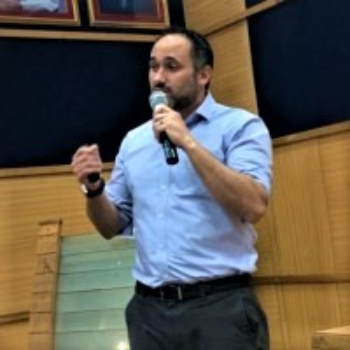
Kyle A. DiVito, PhD is an Assistant Professor in the Department of Biochemistry and Molecular & Cellular Biology and the Associate Director of the Biotechnology Program.
Bio and Featured Works
Dr. DiVito joined the Department in November 2018. His teaching responsibilities include acting as course director for Advanced Biochemistry; Core Methods in Biotechnology; 3D Cell Culture; and Techniques in Recombinant Protein Production & Bioprocessing. In the laboratory, Dr. DiVito pursues a variety of focused efforts. Projects include a collaborative research project with the US Army to assess the toxicological effects on cultured liver and kidney cells from exposure to polyfluoralkyl substances (PFAS). Yet another project includes refining methodologies for scale-up antibody production using benchtop bioreactors. Finally, significant research effort is devoted to improving human in vitro organ models by providing a mechanism to support the development of larger tissue constructs through in vitro tissue vascularization. His interests lie in combining microfluidic technologies with innovative bio-synthetic materials for use in organ-on-chip technology. His past work has successfully developed both vascularized human skin and blood-brain-barrier organ models. As a mentor, Dr. DiVito accepts MS and PhD candidates into his laboratory to fulfill their capstone internship & rotation projects, and since joining the Program in 2018, has trained more than twenty MS candidates.Prior to joining the faculty at Georgetown, Dr. DiVito was a Staff Scientist at the Center for Veterinary Medicine at the Food and Drug Administration (FDA) in Rockville, MD. He reviewed sterile injectable generic pharmaceutical applications for veterinary products. He also coordinated with colleagues to draft guidance documents for industry and provided organizational support for site visits to pharmaceutical facilities.
From 2014-2016, Dr. DiVito was the recipient of a post-doctoral fellowship from the American Society for Engineering Education (ASEE) and he performed his fellowship at the U.S. Naval Research Laboratory (NRL) in Washington, DC. His work on synthetic blood vessel fabrication and organ-on-chip technology continued through 2018 when he joined the staff as a full-time Research Biologist. While at NRL, Dr. DiVito developed a novel functional microfluidic platform that uses poly-ethylene glycol based polymers to fabricate bio-compatible, synthetic human blood vessels. This work utilized microfluidics and techniques in bioengineering to create an in vitro model to mimic human vasculature. These fabricated blood vessels were then used in either human skin reproductions or as an in vitro model of the human blood-brain barrier. Dr. DiVito’s innovative approach led to speaking invitations at numerous conferences including the annual Materials Research Society (MRS) meeting; Center for Advanced Self-Powered Systems of Integrated Sensors and technologies (ASSIST): ‘Skin for Engineers’ workshop; and Development and 3D Modeling of the Human Brain at the Cold Spring Harbor Laboratory.
Dr. DiVito completed his PhD at Georgetown University under the mentorship of Dr. Dean Rosenthal in the Department of Biochemistry and Molecular & Cellular Biology. Dr. DiVito’s thesis work focused on carcinogenesis, specifically, mechanisms related to the transforming growth factor-beta (TGF-β) pathway in melanoma. His work led to identification of a novel signaling pathway in melanoma that controls processes related to melanin synthesis. Dr. DiVito’s work also uncovered mechanisms related to cell adhesion in non-canonical TGF-β signaling. Dr. DiVito maintains a strong scientific interest in skin cancer and melanoma.
Prior to entering graduate school Dr. DiVito was a Research Associate in the Pathology Department at Yale University School of Medicine under the guidance of Drs. David Rimm, Robert Camp and Harriet Kluger. While at Yale, Dr. DiVito used tissue microarray technology coupled with the Automated QUantitative Analysis (AQUA®) platform to investigate prognostic biomarkers in both melanoma and breast cancer. As a scientific consultant, Dr. DiVito also helped establish HistoRx, Inc (now Genoptix, a Novartis company) a spinoff biotechnology company from Dr. David Rimm’s laboratory at Yale which provided a quantitative approach to diagnostics pathology and aided in cancer biomarker discovery.
Dr. DiVito received his B.S. in Molecular and Cell Biology from the University of Connecticut in 2002.
About Kyle Divito
Expertise
Biomedical EngineeringCancer Biology
Melanoma
Microfluidics
Neurologic, Brain, CNS Cancer
Vascular mechanisms